
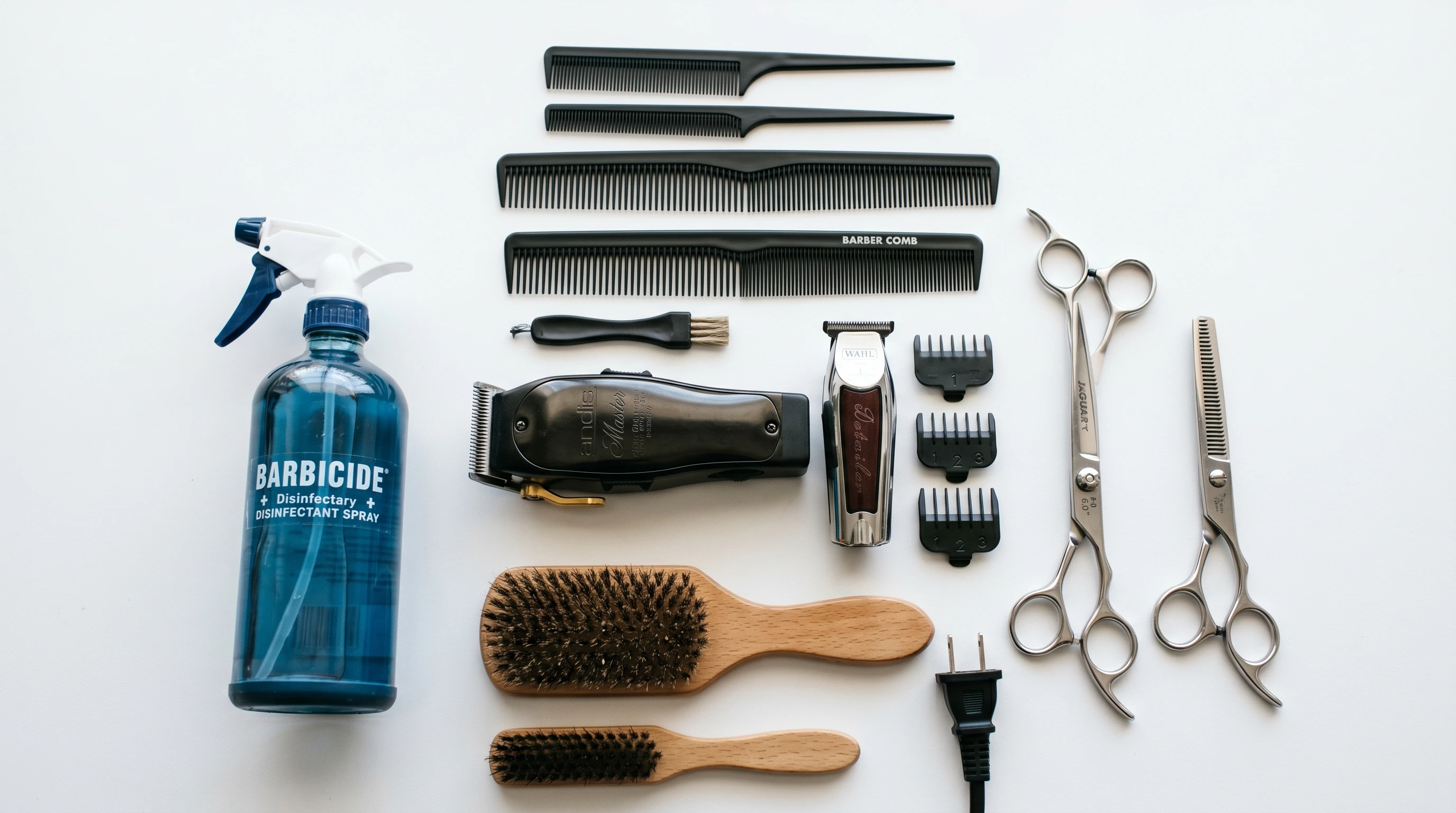
 Keeping barber tools clean and safe isn’t just about meeting health regulations. Clean tools keep your clients healthy, your reputation strong, and your work environment much more pleasant. Dirty, dull, or cross-contaminated tools can lead to infections or other problems. That’s something every barber wants to avoid, since it can impact both health and business.
If you’ve ever found yourself wondering if there’s a best way to sanitize clippers, how often you should disinfect your combs, or what products actually get the job done, you’re not alone. Making your cleaning routine a regular habit can save you a ton of stress, keep your clients happy, and give you confidence in your day-to-day work.
This guide covers the key steps you’ll want to follow for cleaning and disinfecting barber tools the right way. I’ll lay out practical advice, give my favorite tips, and help you make sense of all the cleaning products out there, so you can maintain a strong reputation and a healthy workspace.
Step 1: Understand Why Tool Cleanliness Really Matters
Cleanliness in a barbershop isn’t just about how things look. Proper disinfection stops the spread of germs, bacteria, fungus, and even pests like lice. When clients see you taking cleaning seriously, you build their trust, and you keep yourself and your coworkers healthier, too.
Health Risks from Dirty Tools
- Spread of fungal infections like ringworm or barber’s itch
- Bacterial infections through small skin cuts or nicks
- Head lice or scabies transmission
- Allergenic reactions from leftover chemicals or hair products
When in doubt, it’s always better to clean more than not enough. That peace of mind adds up over time, both for your safety and your client’s.
Step 2: Know Your Cleaning and Disinfection Basics
There’s a difference between cleaning, disinfecting, and sterilizing. Here’s how I keep them straight:
- Cleaning: Removes hair, dirt, oils, and most debris (using soap and water or a brush).
- Disinfecting: Uses chemicals to kill most germs, viruses, and bacteria left after cleaning.
- Sterilizing: Eliminates all forms of microbial life. Sterilizing is rarely needed for barber tools, but sometimes used for things like straight razor blades with an autoclave.
Most of the time, barbers focus on cleaning and disinfecting. Regular soap and water won’t kill all the germs, but it sets the stage for disinfectant sprays and liquids to do their job well.
There are also UV sanitizers used by some barbers for tools between clients, but a solid process with proper cleaning and a trusted disinfectant can get the job done just as well.
Step 3: Daily Cleaning Routine for Barber Tools
Sticking to a daily routine helps you keep your cleaning on track and avoid nasty surprises. Here are the basic steps you’ll want to follow with the most commonly used barber tools:
Combs and Brushes
- Remove loose hair with a cleaning brush or comb pick.
- Wash thoroughly with warm, soapy water.
- Rinse completely and dry with a clean towel.
- Soak in a disinfectant solution made specifically for barber tools (like Barbicide) for at least 10 minutes.
- Remove and let air dry on a clean towel, not on a countertop or surface that hasn’t been disinfected.
Clippers and Trimmers
- Brush away all hair and debris after every use.
- Spray clipper blades with an approved disinfectant spray (many barbers like Andis Cool Care or Wahl disinfectant spray).
- For a deep clean, remove blades as needed and soak according to the manufacturer’s instructions.
- Oil moving parts after cleaning and before next use for smoother operation.
Scissors and Shears
- Wipe blades with a clean, damp cloth after each use.
- Wash with mild soap and water at least once daily, then dry completely.
- Soak in disinfectant solution for 10 minutes at the end of the day.
- Dry thoroughly and oil the pivot point to keep the action smooth.
Razors and Straight Edges
- Always use new, disposable blades for each client.
- Clean and disinfect reusable handles or blade holders between clients.
It’s also important to avoid keeping damp tools in closed cases or drawers, since moisture makes a perfect spot for mildew and germs to grow. Let your tools dry in the open on a freshly cleaned towel whenever possible.
Step 4: Safely Handling Disinfectants and Equipment
Barber disinfectants can be powerful. Here are some best practices I always follow:
- Wear disposable gloves if you have cuts or sensitive skin.
- Use the recommended dilution for liquids like Barbicide. Don’t use a stronger solution than you need to.
- Never mix cleaning products; mixing them can be dangerous.
- Store mixed disinfectant in a closed jar and change it out every day or as directed on the label.
- Label any spray bottles or jars clearly, so others know what’s inside.
Always double-check the instructions on your chosen disinfectant, since not all products work in the same way. Some are meant to soak tools, others are for quick sprays between uses. Read the manufacturer’s guidelines and follow all instructions for safe and effective cleaning.
Step 5: Cleaning and Disinfecting Your Work Area
Tools aren’t the only things that need attention. Countertops, chair arms, capes, and headrests all collect hair and germs too. I make a point to:
- Wipe chairs, counters, and tool trays with disinfectant after every client.
- Launder hair capes and towels after each use. Don’t let damp or dirty laundry sit around since that can attract unwanted smells and even pests.
- Vacuum or sweep hair from the floor regularly during the day, not just at closing time.
- Keep closed garbage bins for single-use items like neck strips or blade wrappers, and empty them daily to control odors.
These steps really help keep the whole space clean and make a good impression on everyone who walks in, showing clients you care about their comfort and health.
Step 6: Tips for Staying Consistent with Cleaning
- Set reminders on your phone or in your calendar to refresh disinfectant solution and clean tools.
- Create a checklist for daily, weekly, and monthly maintenance tasks. This way, nothing gets forgotten, even on the busiest days.
- Store backup cleaning supplies close at hand; nothing is worse than running out of disinfectant mid-shift.
- Get everyone on your team involved and keep each other accountable. Teamwork makes the process smoother, and clients will notice your attention to detail.
A little organization goes a long way, especially on those busy days where it’s easy to skip a step. Some shops post their cleaning schedule in the break area just to make sure the routines never fall through the cracks.
Common Questions and Troubleshooting
How often should I clean my barber tools?
Clean between every client whenever possible, and fully disinfect tools at least once per day. Reusable items like razors’ handles and combs need cleaning after each use. Don’t forget to give a quick once-over to trimmers and scissors as well, even between clients.
What’s a good disinfectant for barber tools?
I usually recommend Barbicide or similar EPA-registered products. Just be sure you’re using the right dilution and soaking time for safe, effective results. Remember, using dedicated products for barber tools helps avoid damage and offers reliable sanitation.
Can I use household bleach?
You can, but it’s super important to mix it correctly (usually 1:10 bleach to water). Bleach can damage metal tools and is harsh on skin, so most barbers prefer products made specifically for their tools. If you do use bleach, rinse tools well and never soak for too long. Always dry completely to prevent corrosion.
How do I stop rust on my barber tools?
- Dry blades thoroughly after disinfecting. Don’t leave them sitting wet.
- Oil metal parts regularly.
- Store tools in a dry, ventilated place rather than a closed, damp case. This stops moisture from causing trouble.
Final Tips and Action Steps for Barbers
A good cleaning routine is something your clients notice and appreciate. Barber tools last longer when you give them attention, and you save money by avoiding early replacements. Plus, a clean toolkit avoids health risks for everyone in the shop.
Your Action Plan:
- Make sure your cleaning and disinfectant supplies are well stocked and labeled.
- Follow a daily checklist for cleaning and disinfecting tools and workstations to build consistent habits.
- Refresh your knowledge by reading product labels and your local health codes every so often. Regulations can change, so staying informed protects both you and your clients.
You don’t have to go overboard or make things fancy, just develop habits you can stick to. And as always, if in doubt, a little extra caution helps keep everyone safe and looking sharp. Remember, clean tools are happy tools, and your clients will thank you for making their safety a top priority every single day.
What a simple and easy to understand break down of something that is too often overlooked. It’s important to keep your tools clean and well maintained, will make for a much better experience for everyone. A daily checklist is a great tip, should make sure to keep it posted and will remind you all day.
the most simplest task are always overlooked. you’d be surprised of how many infractions take place in the local barbershops. Thanks for stopping by
Geoff